| Proprjetà | Fowm EVA | Fowm EPE | Fowm ta 'l-isponża (PU) |
|---|
| Wiċċ | Lixx & multa | Aktar aħrax | Artab, poruż |
| Firxa tad-densità (kg / m³) | 30–300 | 15–50 | 10–60 |
| Assorbiment tal-ilma | Xejn | Baxxa ħafna | Għoli |
| Elastiċità | Għoli | Medju | Għoli ħafna (artab) |
| Durabilità | Eċċellenti | Tajjeb | Ġust |
| Użi komuni | Sport, ippakkjar, ġugarelli | Ittaffi, protezzjoni | Għamara, tindif |
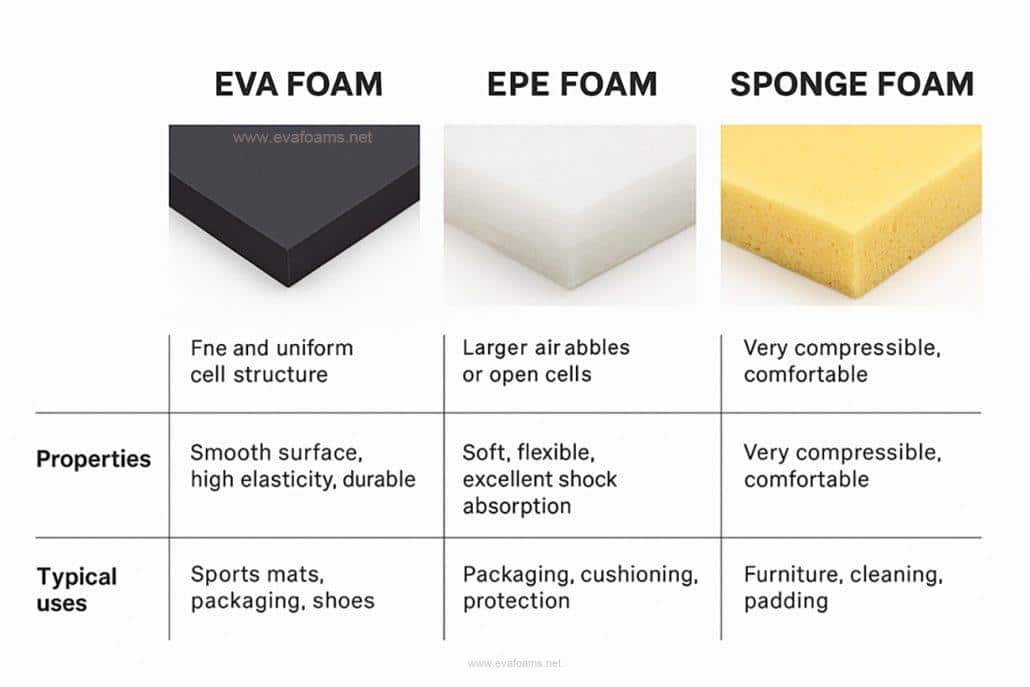
1. Fowm EVA (Ethylene Vinyl Acetate)
Karatteristiċi:
- Struttura taċ-ċelluli fina u uniformi (wiċċ lixx)
- Elastiċità għolja u toughness
- Reżistenza tajba għall-ilma u durabilità
- Jista 'jkun die cut, iffurmat bis-sħana, laminati, jew stampat faċilment
- Firxa tad-densità: 30–300 kg/m³
- Disponibbli fi diversi kuluri u livelli ta 'ebusija
Użi Tipiċi:
- Mats sportivi, blokki tal-yoga, ċinturini tal-għawm
- Inserzjonijiet tal-ippakkjar (elettronika high-end, għodda)
- Pettijiet taż-żraben, pads għall-irkopptejn, ġugarelli
Vantaġġi: Temm lixx, durabbli, customizable, mhux tossiku
Cons: Ftit aktar għaljin minn EPE
2. Fowm EPE (Polyethylene Estiża)
Karatteristiċi:
- Ħfief ma bżieżaq tal-arja akbar / ċelluli miftuħa
- Artab u flessibbli, eċċellenti assorbiment ta' xokk
- Reżistenti għall-ilma u kimiċi
- Firxa tad-densità: 15–50 kg/m³
Użi Tipiċi:
- Ippakkjar (elettronika, ħġieġ, għamara)
- Protetturi tat-tarf, tubi tal-fowm, insulazzjoni
Vantaġġi: Spiża baxxa, ttaffi tajjeb, jistgħu jerġgħu jintużaw
Cons: Wiċċ mhux maħdum, inqas sod minn EVA, mhux adattat għal qtugħ ta 'preċiżjoni
3. Fowm ta 'l-isponża (Poliuretejn jew Fowm PU)
Karatteristiċi:
- Struttura ta 'ċelluli miftuħa (artab u jieħu nifs minnu)
- Ħafna kompressibbli u komdu
- Jassorbi l-ilma faċilment
- Firxa tad-densità: 10–60 kg/m³
Użi Tipiċi:
- Kuxxini tas-sedil, assorbiment tal-ħoss, sponoż kosmetiċi
- Prodotti tat-tindif, gaskits, padding
Vantaġġi: Artab ħafna, komdu, prezz baxx
Cons: Jassorbi l-ilma, durabilità fqira barra, mhux adattat għal tagħbijiet tqal